
Checkpoints: USAFA grad honored with Silver Star
Lt. Col. William “Skate” Parks ’07 has received one of the profession of arms’ highest commendations
The gravity of what had just transpired in the skies somewhere over the Middle East did not fully register with Lt. Col. William “Skate” Parks ’07 until he landed at an undisclosed location.
Once on the ground, Col. Parks reconnected with his wingman, then turned toward a flight line filled with celebration, relief and curiosity. Aircrew crowded around, eager to understand what had just unfolded. Col. Parks did his best to answer their questions.
In the moment, words were hard to come by. What Col. Parks did not yet know was that the mission from which he had just returned would lead to one of the highest and rarest commendations in the U.S. Air Force.
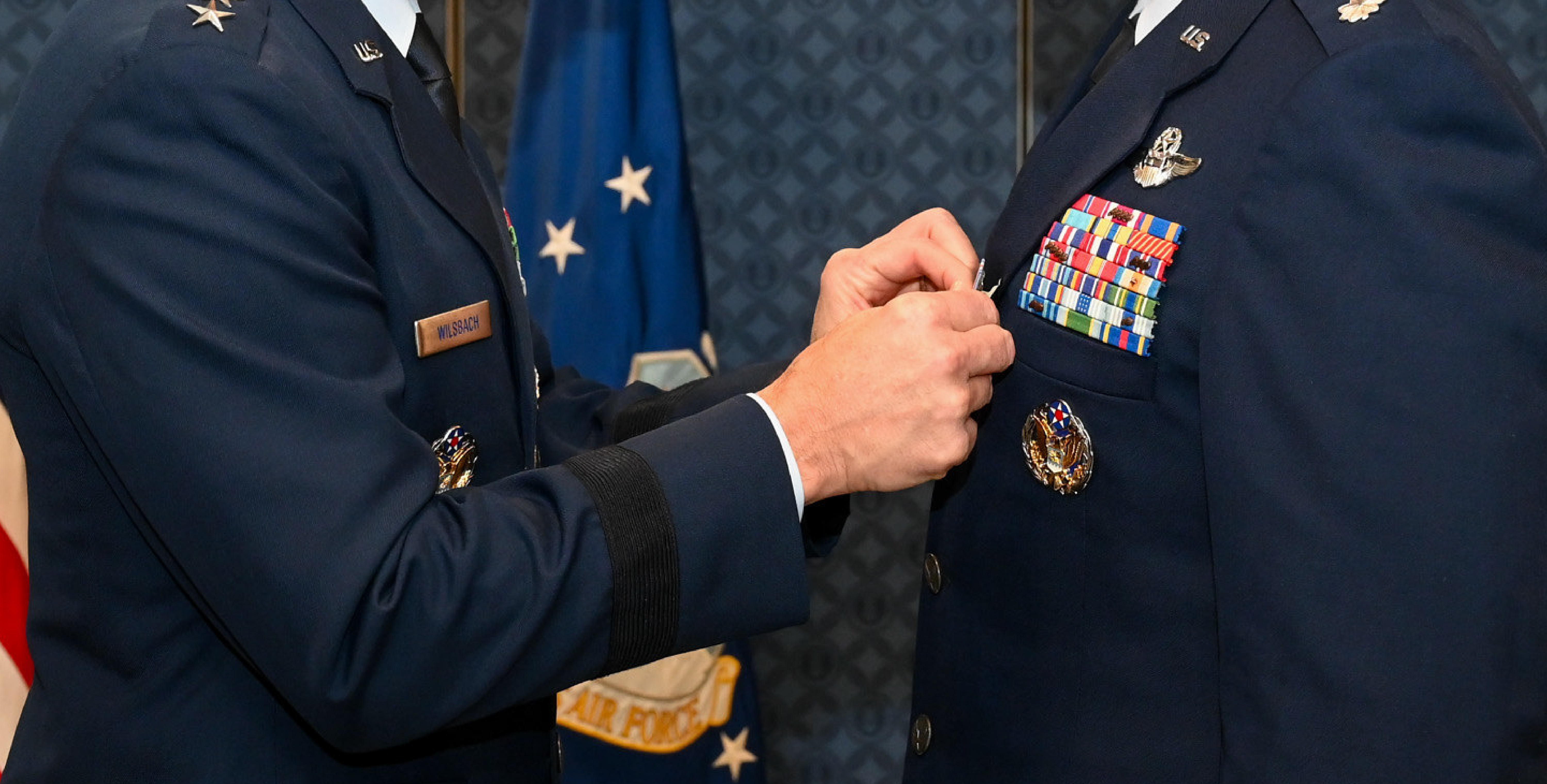
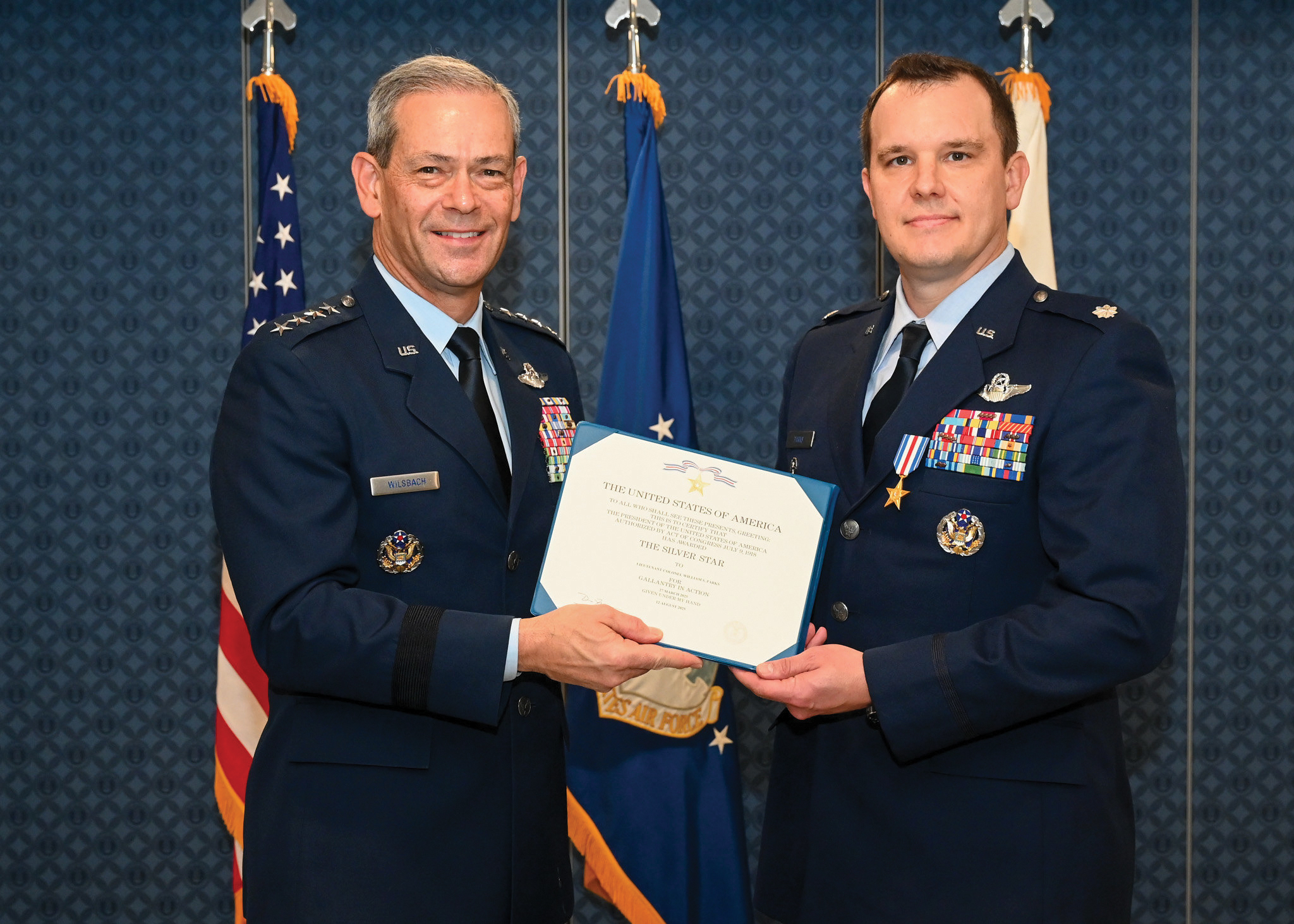
“It’s a rare day when someone earns a Silver Star, with less than 100 being earned during the Air Force era,” Air Force Chief of Staff Gen. Ken Wilsbach said as he presented the medal to Col. Parks during a ceremony at the Pentagon in November 2025. “After hearing Skate’s story — his leadership, decisive action and skill in the face of danger — I absolutely believe he deserves this honor.”
Col. Parks deflects the attention, even now.
“It’s great to get a little recognition and be honored for what I did,” he says of the March 27, 2025, mission. “But part of it is also circumstance. I was the person who happened to be in that situation.”
He says, “There are a lot of people who could have been in that position and done the exact same thing. I just happened to be the one that night.”
During that early spring mission, circumstance intersected with preparation and leadership — the cumulative result of nearly two decades in uniform, beginning with Col. Parks’ first steps across the Terrazzo at the U.S. Air Force Academy.
INTO THE UNKNOWN
As mission commander, Col. Parks led the Wild Weasel operation designed to suppress enemy air defenses — among the most dangerous missions a fighter pilot can undertake.
Wild Weasel missions require pilots to do what most aviators are trained to avoid: deliberately provoke enemy surface-to-air missile systems into revealing themselves. The job is to detect, target and destroy those systems so other aircraft can operate safely.
“You spend a day kind of coming up with a plan, and then you go into a mission rehearsal, getting the details down to the second,” Col. Parks says. “So it’s very deliberate, very specific, and we all knew our roles to go out and support that night.
“You’re thinking through contingencies the entire time,” he adds. “What happens if this breaks? What happens if the threat does something unexpected? That’s what we train for.”
Once airborne, Col. Parks and his wingman, Maj. Michael “Danger” Blea, split from the larger formation and pushed deeper into contested airspace.
“So Danger and I are a two-ship heading deeper into [the] country,” Col. Parks says. “We start picking up a lot of fireworks along the ground. It almost feels like the ground’s moving a little bit. So you get the sense that they’re aware that you’re there.”
Things escalated quickly.
“I’ve never been shot at by a SAM before this, and I’ve always wondered if I’d know what it looked like,” Col. Parks says. “And I can tell you that I had no doubt at that moment — I knew exactly what it was, and I knew we were in trouble.”
Col. Parks explains, “You don’t have time to be surprised. You immediately go into execution mode.”
Col. Parks directed Blea to fire an AGM-88 HARM missile at a SAM site. Moments later, Col. Parks launched one of his own. Both missiles struck successfully, eliminating the threat and allowing the larger strike package to continue its mission.
But as Col. Parks and Blea maneuvered to exit the area, the enemy responded.
A missile streaked past Col. Parks’ F-16, narrowly missing Blea before detonating overhead. Then another. And another.
“It wasn’t just one shot,” Col. Parks says. “They kept coming.”
In total, six missiles launched toward the two F-16s. Col. Parks reacted to each threat while tracking his rapidly diminishing fuel.
“Unfortunately, during the sequence, because it lasted so long, we started at bingo, and it moved our fuel pretty low,” Col. Parks says.
At that point, rather than retreating, Col. Parks maneuvered deeper into the enemy’s air defense zone, intentionally placing himself within SAM range to draw missile fire away from the rest of the formation.
“That was a conscious decision,” Col. Parks says. “If they’re shooting at me, they’re not shooting at everybody else.”
The move created time and space — enough for the remainder of the strike package to complete its objectives and begin its exit.
“You’re just solving a problem in front of you,” Col. Parks says. “You don’t really have time to think.”
NOT ALONE
As fuel levels dropped below planned minimums, Col. Parks contacted command and control to coordinate refueling options. Tanker aircraft repositioned to support the fighters, accepting increased risk of their own.
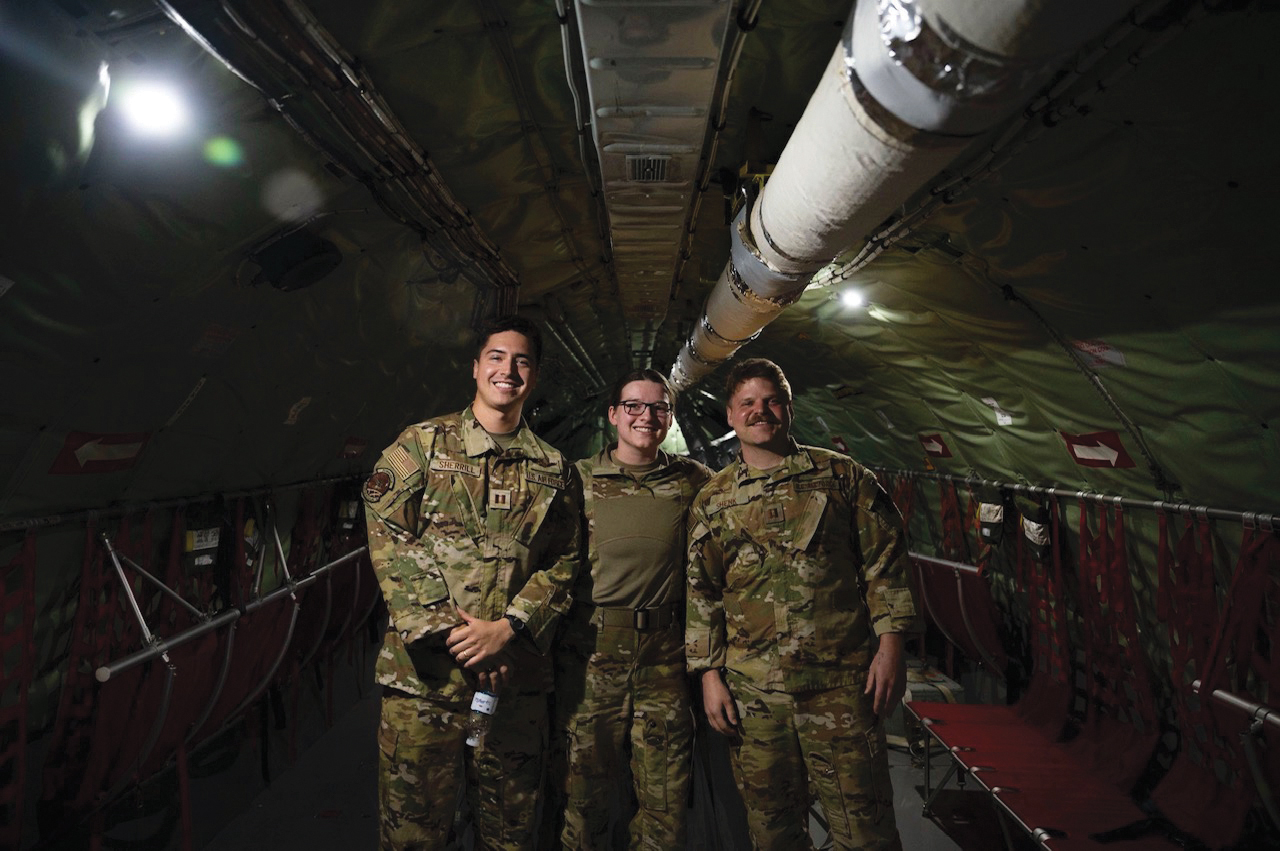
One of the tanker pilots who answered the call was Capt. Timothy Shenk ’16, flying a KC-135.
“We met [Col. Parks] the day of the flight,” Shenk says. “He came over to our squadron to brief in person. He let us know the gas plan was going to be a little bit tight and to be listening up on the radios, ready to change the plan.”
Initially, the tanker crew launched under routine conditions.
“We didn’t hear anything from them for a while,” Shenk says. “Then all of a sudden we heard some distress calls that people needed gas immediately, and we had to change our plan to meet them somewhere else.”
Shenk had experienced emergency fuel situations before — once, maybe twice in his career. This one stood out.
“You just start flying toward them at max speed and get there as fast as you can,” he says. “You give them whatever you can to help them keep flying.”
The tanker crew had been briefed on the possibility that Col. Parks and his wingman might draw fire to protect the strike package.
“We knew that was a possibility,” Shenk says. “We knew we might need to get closer to the fight.”
Both F-16s received fuel and returned safely.
“It was an incredible thing to be a part of,” Shenk says. “Not a lot of people get that opportunity — you can train your whole career and never get a mission like that.
“I’m proud to have been part of it, and I think our entire team — Team Fairchild — is proud of the impact we made.”
The tanker crew later received the Distinguished Flying Cross with combat “C” device — a rare honor in its own right.
ROOTS AND RESOLVE
Col. Parks’ path to the Silver Star began decades earlier.
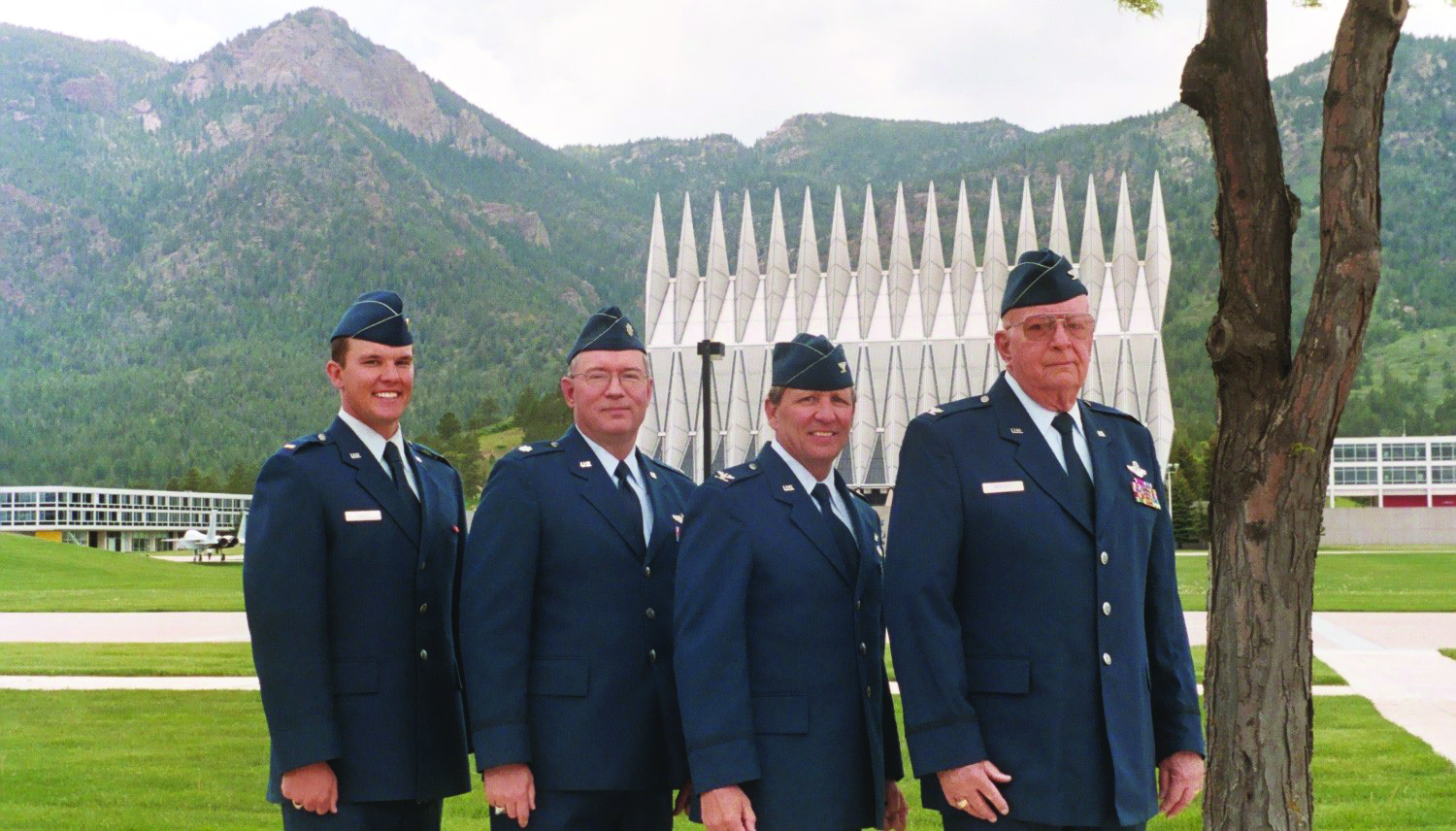
He grew up immersed in U.S. Air Force culture. His grandfather flew more than 30 aircraft across a career spanning the 1950s through Vietnam, retiring as a colonel. His father became an Air Force test pilot. An uncle graduated from the Academy in 1976 and flew the FB-111. His brother and cousins also fly Air Force aircraft.
“I grew up moving all over the place,” Col. Parks says. “The longest I ever lived anywhere was Florida, so I claim Melbourne as my hometown.”
Joining the Air Force was never in doubt. Attending the Academy was.
“I didn’t want to go,” Col. Parks says. “Not at first.”
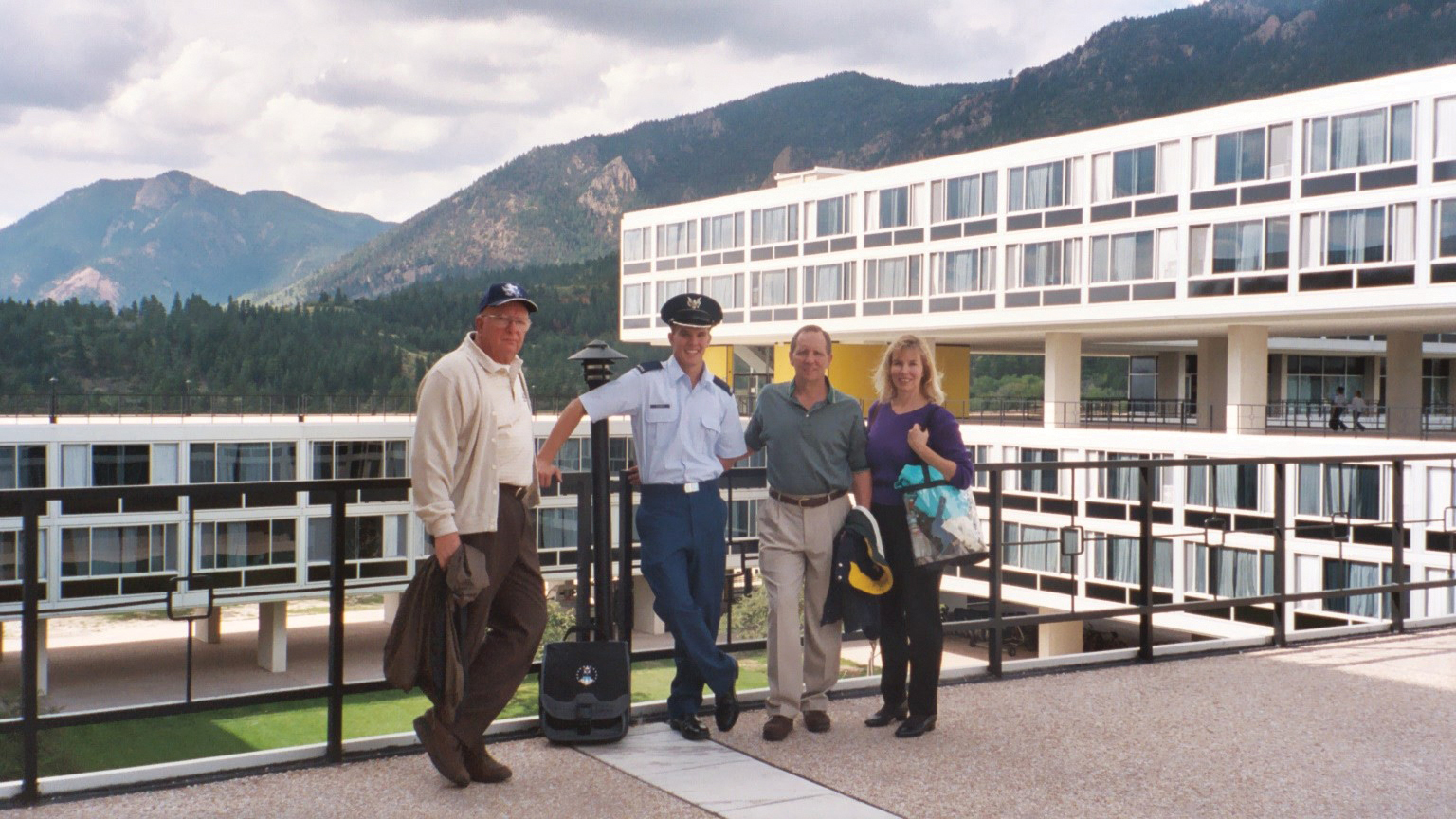
He planned to pursue ROTC at a civilian university closer to home. That changed after his father suggested a visit to Colorado Springs.
“You show up at the Academy and it’s incredible,” Col. Parks says. “The setting alone gets your attention. Then you start looking at the academic programs and the opportunities — things you just can’t do anywhere else.”
One opportunity stood above the rest.
“I always wanted to be a pilot,” he says. “And one of the best ways to do that is the Academy.”
Cadet life, Col. Parks says, tested him immediately.
“I definitely was not top of my class,” he says. “But I had a lot of good friends around me who helped me get through the mechanical engineering program.”
Col. Parks says, while his fourth-class year was a struggle due to the discipline, academic pressure and isolation, he leaned on his teammates to make it through.
“I found some of my closest friends living in a room with two other people,” he says. “Meeting people from all around the U.S. was really cool. But it’s also lonely.”
To manage the stress, Col. Parks leaned on routine.
“I just had to hit the gym every day because of the stress from academics,” he says. “It gave me a reset before going back to studying.”
Down the hill at Davis Airfield, he found something else that melted away his stress.
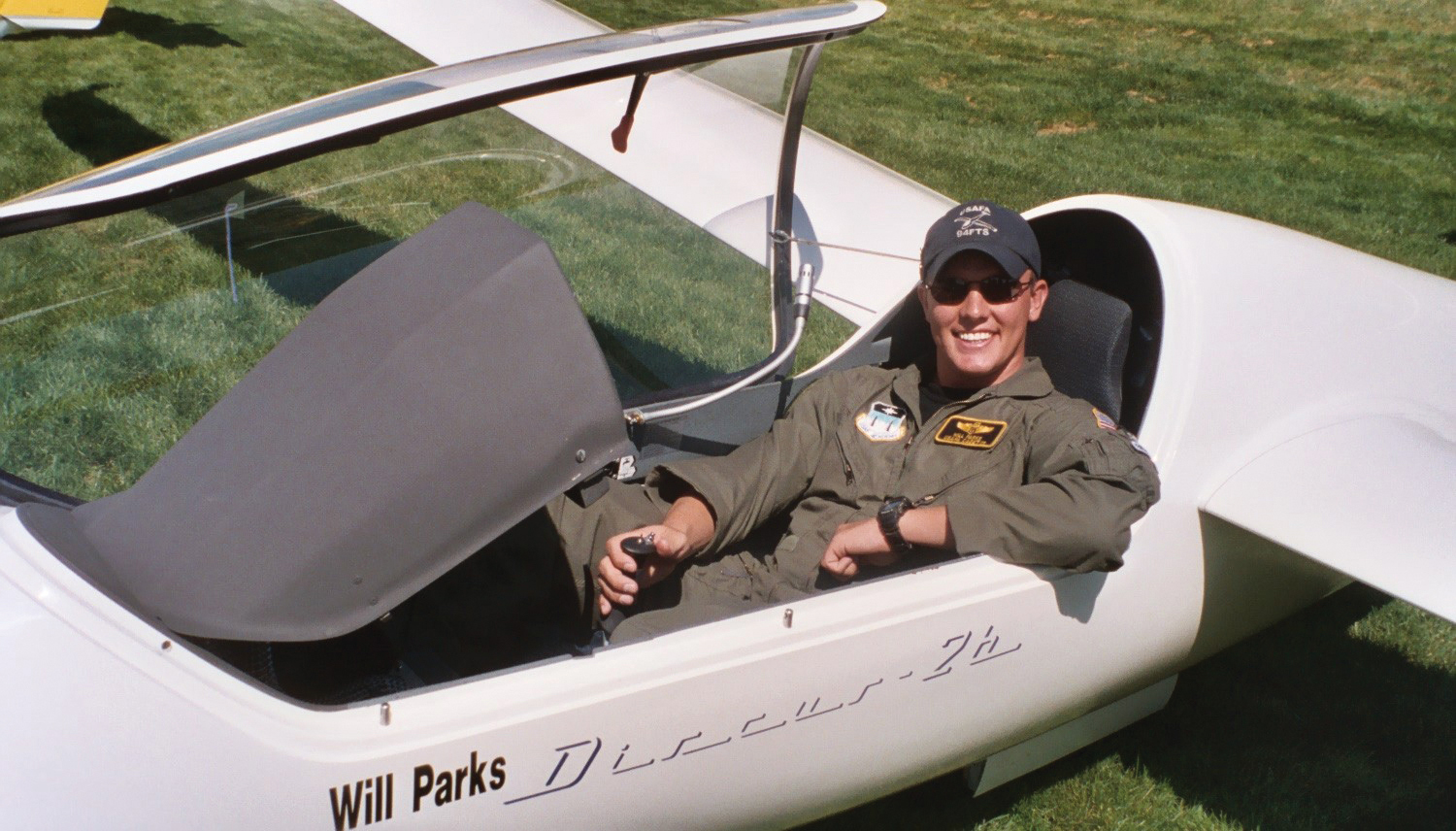
“For three years, I spent almost every day at the airfield,” Col. Parks says. “Flying gliders, instructing — it’s the purest form of flying I’ve ever done.
“No doubt in my mind, that’s what made the biggest difference for me,” he adds. “When I graduated and went to pilot training, that background in the true basics of aviation helped me excel.”
THE TEAM THAT CARRIES YOU HOME
The night of March 27 reinforced something Col. Parks learned early: No one fights alone.
Lt. Col. Graydon “Jean-Claude” Vandament ’07, commander of the KC-135 squadron supporting the mission, watched events unfold from the operations floor.
“We were classmates at the Academy,” Col. Vandament says. “I couldn’t tell you what class we had together, but it was one of those classic Academy moments — you know you’ve crossed paths.”
That shared background mattered.
“It let us cut through a lot of the chaff,” Col. Vandament says. “It became, ‘What do you need from us? What do we need from you?’”
The operation was anything but routine, Col. Vandament explains.
“It was an extremely challenging operation,” he says. “A lot of last-minute mission changes, gaps in available intelligence. The Wild Weasels were really the last bastion of making sure everyone got home safe.”
Col. Vandament says Col. Parks’ actions and honor didn’t come as a surprise.
“That’s just who he is,” he says. “A consummate expert in his craft, always leading from the front.”
WHAT ENDURES
“I would say it’s starting to sink in.”
Nearly a year later, Col. Parks has had time to reflect on that March night and his recent commendation.
“I’ve had a lot of people reach out to me,” he says. “In fact, there’s one or two people who had earned a Silver Star who shot me a message, and that meant a lot.”
Still, he continues to redirect the spotlight.
“There will be more to follow after me,” Col. Parks says. “I have no doubt. And I’m extremely honored to share this with my wingman, who did a lot of work that night to make the mission successful and get us home safely.”
Col. Parks collects his thoughts and continues.
“There is a long line of people who have done it before, and it’s hard to feel completely deserving of that honor,” he says. “But I am honored.”
For today’s cadets — and tomorrow’s Silver Star honorees — his message is simple.
“You need to prepare now,” Col. Parks says. “Physically and mentally — through academics, through military training, through whatever extracurriculars you’re doing. That way, when you walk across that stage at graduation and the country asks something of you, you’re ready.”
On March 27, 2025, readiness — and a team willing to accept risk for one another — ensured every member of that mission made it safely home.'
SULLENBERGER AWARD FOR COURAGE
In addition to earning the Silver Star, Lt. Col. William “Skate” Parks ’07 has been recognized with the Sullenberger Award for Courage — an honor named for Ambassador Chesley “Sully” Sullenberger ’73, the retired captain who saved 155 lives aboard US Airways Flight 1549 in 2009 — known as the “Miracle on the Hudson.”
The award recognizes Academy graduates who demonstrate exemplary vperformance during a singular act or series of events within a short period of time — actions that far exceed expectations and embody the Academy’s core values: integrity first, service before self and excellence in all we do. Honorees may distinguish themselves in military, civilian, business or community settings, with acts that reflect positively on the Academy and the training it provides.
Col. Parks earned the distinction for his leadership as commander of the 480th Expeditionary Fighter Squadron during combat operations supporting Prosperity Guardian, Inherent Resolve, Spartan Shield and Rough Rider. His courage and innovation defined a high-risk campaign that resulted in 108 aerial victories against drones and cruise missiles, 50 days of Wild Weasel missions, and a Gallant Unit Citation for the squadron.
“I’m truly honored to be selected for the Sullenberger Award for Courage,” Col. Parks says. “I’ve long admired Captain Sullenberger and am humbled to even be considered.
“Our actions throughout the nine-month deployment and on the night of March 27 were undoubtedly guided by training going back to my time at the Air Force Academy. More importantly, the years at USAFA allowed the opportunity to develop relationships that played a key role in our success during that mission and the entire campaign. To serve alongside as squadron commanders in combat with a fellow ’07 classmate (JC Vandament) highlighted the unique relationships built over the years. More so, it was his squadron, led by a 2016 graduate, that exhibited courage in accepting risk in the face of the enemy to refuel our two-ship of F-16s inside adversary threats, saving us from the probable loss of our aircraft from fuel starvation.
“I’m incredibly thankful and fortunate I had the opportunity to command the 480th Fighter Squadron — a squadron that led from the front as ‘Wild Weasels’ and was filled with people that flew daily on missions knowing the risk. With USAFA graduates from ’07 to ’20, we had a near generation of aviators that strapped into their jets ready to fight together.
“More than 100 aerial victories against drones and cruise missiles, 50 days of Wild Weasel missions, and a litany of combat firsts — the results speak for themselves, and it’s no surprise the 480th Fighter Squadron members have been honored with two Silver Stars, 12 Distinguished Flying Crosses, a multitude of single-event Air Medals and a Gallant Unit Citation.
“It’s incredible to be honored with the Sullenberger Award, but I can assure you, the true courage was exemplified by those I served with.”