
Checkpoints: National Security Matters
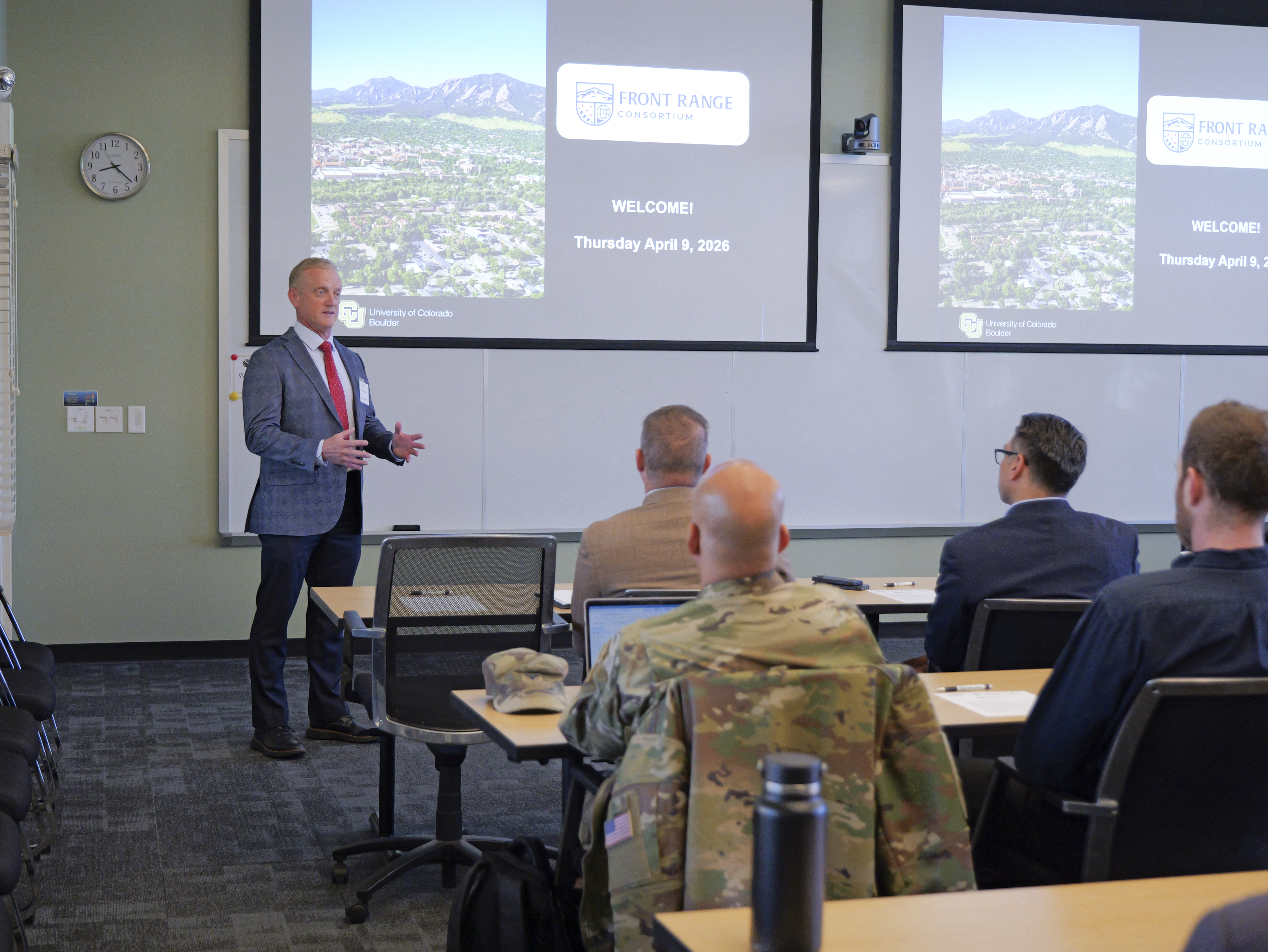
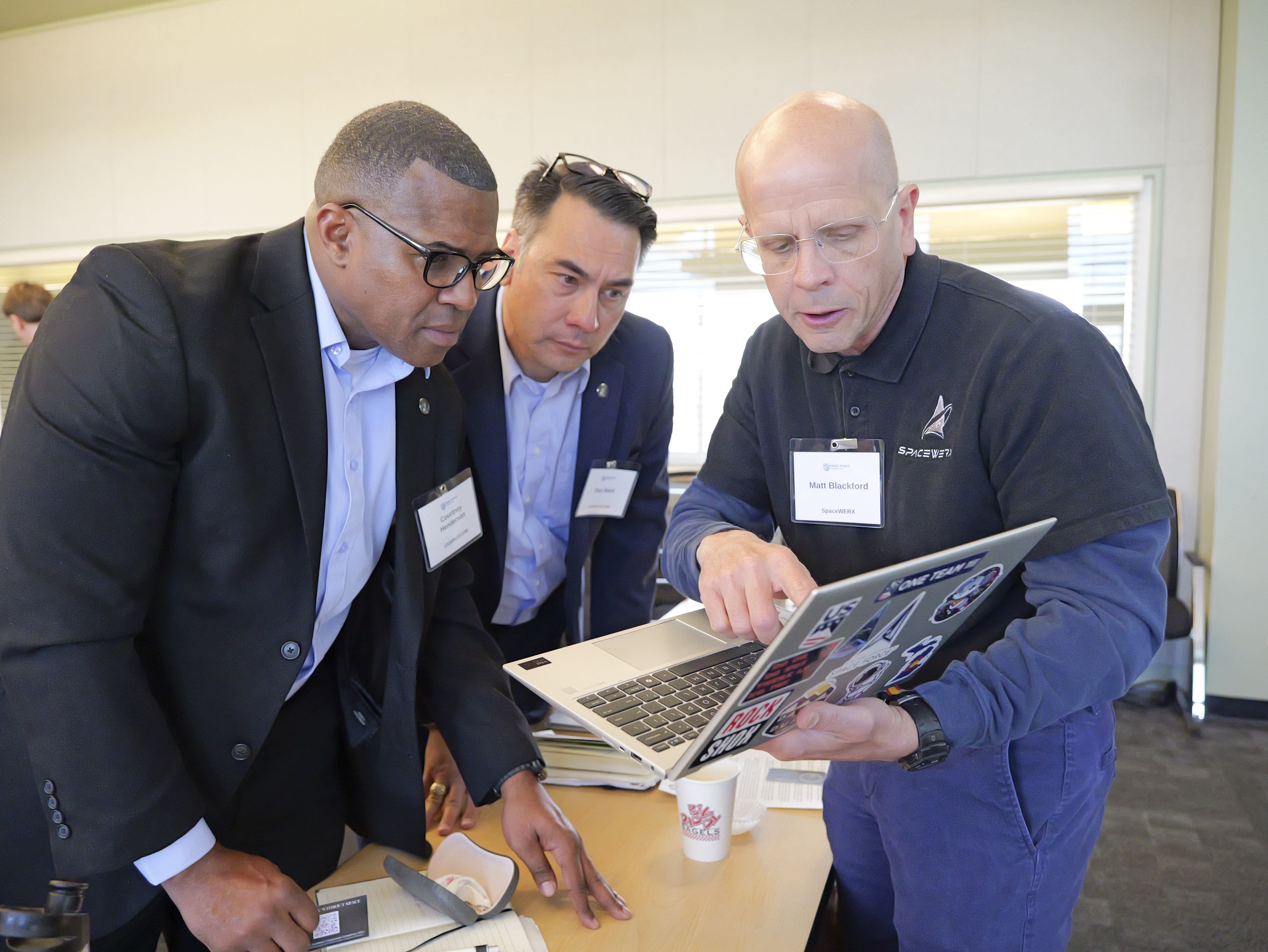
Some of Colorado’s foremost space researchers gathered in an unassuming conference room at the University of Colorado Boulder in early April to share their expertise with potential academic, industry and military partners.
They highlighted their work in hypersonics, space situational awareness, space technologies for the International Space Station and more.
“Space is no longer just a frontier. It is a frontier of national security,” Dr. Massimo Ruzzene, vice chancellor of research and innovation at CU Boulder, said at the start of the Front Range Consortium-sponsored forum.
The people attending the forum represent what some call the triple helix of innovation or the three-legged stool of research. They were in Boulder as part of a Front Range Consortium endeavor to start conversations and create partnerships that will strengthen national security and the Colorado Front Range’s role in advanced solutions. The consortium was created through the philanthropic support of The Anschutz Foundation and is hosted at the U.S. Air Force Academy Association & Foundation.
UNDERGRADUATE INVOLVEMENT
The FRC is looking to the future with its National Security Scholars program.
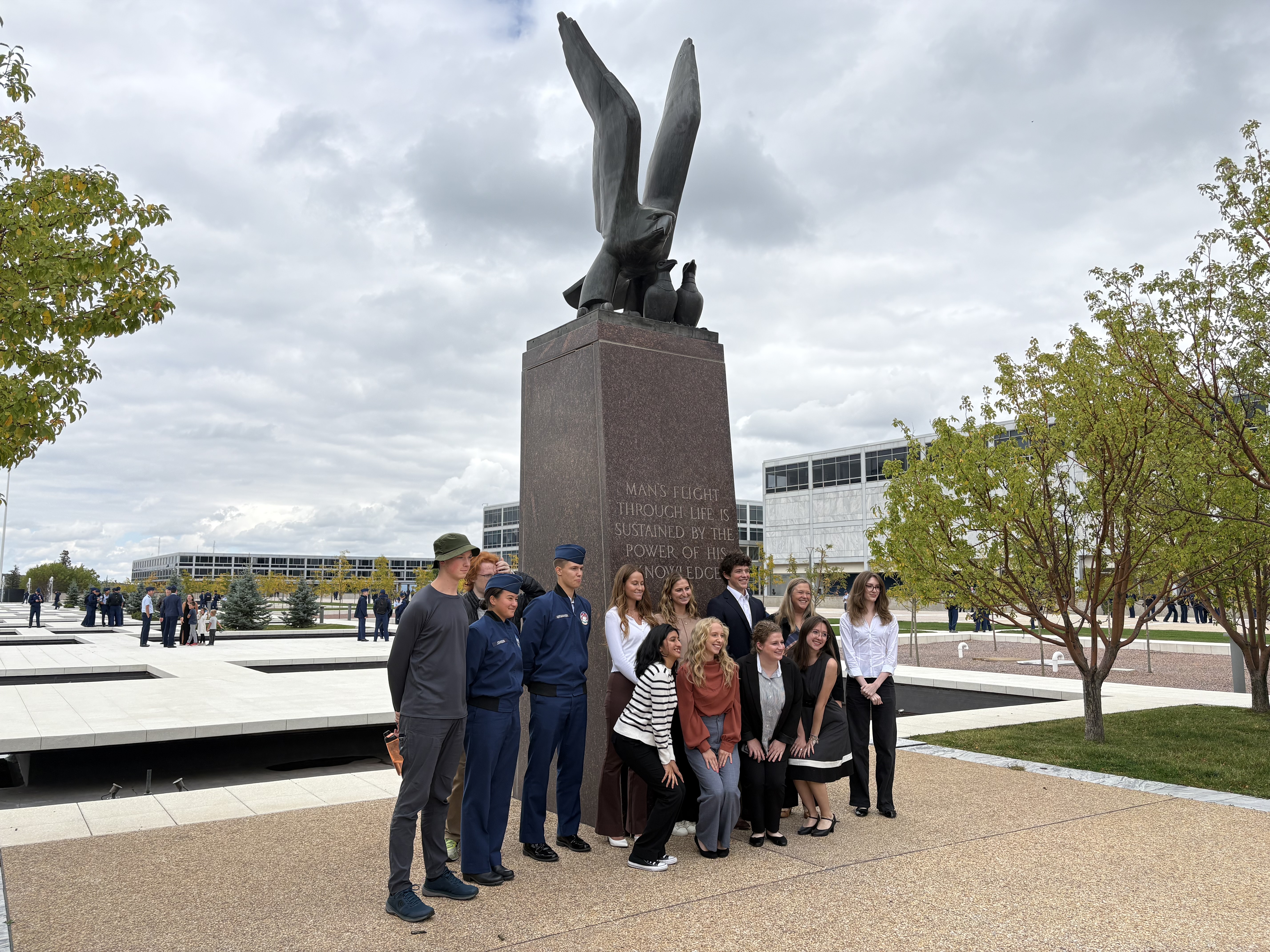
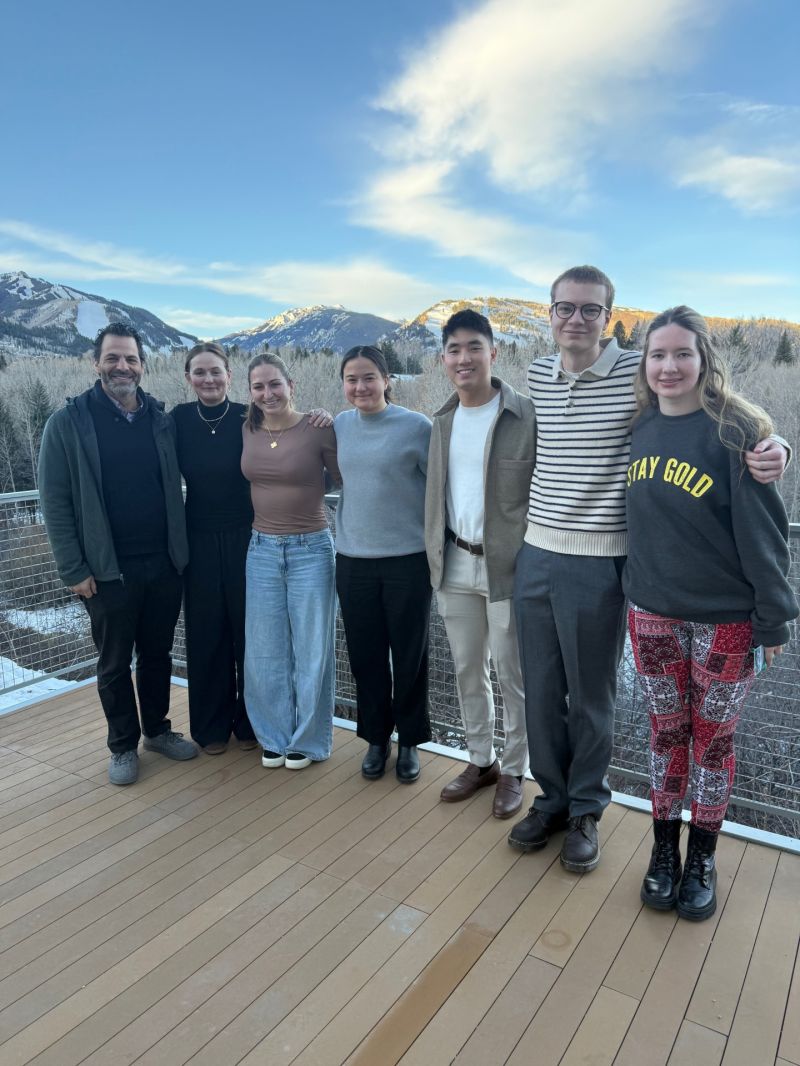
Twelve undergraduates — two from each of the original six partner schools — participate in a wide range of activities that expose them to national security topics and expand their professional networks. The two Air Force Academy cadets can take advantage of research funding while the other students receive scholarships to offset their tuition.
The scholars conduct research, participate in monthly online lectures with national security experts, and attend immersions events, including a culminating five-day experience in Washington, D.C. Once their yearlong engagement is complete, they will have opportunities for internships with industry partners, U.S. Northern Command and U.S. Space Command.
Cadet 2nd Class Lily Johnson originally applied to the Front Range Consortium to gain a broader understanding of national security organizations and how they work together to provide fuller national security. She received much more than that.
From touring U.S. Northern Command at Peterson Space Force Base to hearing from an FBI agent about domestic terrorism threats, Johnson and the rest of the FRC student cohort learned from each other as they were educated in the many facets of national security.
“There are jobs in the military that I didn’t know about. I gained an understanding that there is room to connect with them throughout my career,” she says. “A lot of people may be hesitant to reach out to do things outside of their discipline. This program has done a really good job of bringing everyone together. It has been impactful for everyone.”
An FRC military partner is optimistic about the organization’s impact on students.
“One of the exciting things the FRC does is expanding the national security space, letting college students know this is an opportunity,” says Col. (Ret.) JJ Johnson ’92, deputy director of the Homeland Defense Institute, a collaboration between USAFA, Northern American Aerospace Defense Command and U.S. Northern Command. “They get to understand the challenges and the opportunities and the rewards of serving within the national security apparatus. The FRC is building tomorrow’s national security leaders today. It’s that simple and straightforward.”
The FRC will announce the 14 scholars for the 2026-27 academic year in July.
The research ecosystem at the Academy also benefits from this expanded focus on the Front Range.
Amy Berg, director of outreach for the office of research at USAFA, has been involved with the FRC since its creation. She is interested in connecting faculty and cadet researchers with other researchers across the Front Range.
“How can we open people’s aperture a little bit and shine a light on the national security research opportunities that exist? How can we connect better with the other Front Range Consortium partners?” she asks.
She and Dr. Jana Weiner, assistant director of research curriculum and programs, have participated in FRC events to help make the connections they believe can create meaningful experiences for cadets and faculty. Dr. Weiner coordinates the cadet summer research program at USAFA.
“Once faculty become more connected, that's a great way to let our cadets and the other students become connected,” Berg says. “I would love to see an FRC-led CSRP that takes place at CU Boulder or NORTHCOM, for example, where you would have students from all of the universities working together on the same problem set and answering a question that is operationally relevant that really could have an impact.”
FULL SPECTRUM OF OFFERINGS
Additional FRC programming focuses on collaboration, supporting national security research, highlighting national security topics and facilitating discussions across the Front Range.
The space research forum in Boulder was one in a series of collaboration opportunities. The FRC also gathered parties to learn about research at Colorado State University and the Air Force Academy.
“The intent is to bring together our partners from the defense industry to showcase the breadth of research being conducted and familiarize them with labs and their capabilities,” says Col. (Ret.) Paul Huffman ’86, director of the FRC.
The national scholars are encouraged to write articles on their research for publication on the Institute for Future Conflict website, and they can participate in the IFC’s annual essay contest. The goal of the contest is to encourage undergraduates to think like an adversary while exposing senior leaders to future possibilities.
Faculty and students at each of the institutions are invited to participate in periodic workshops designed to strengthen partnerships and create conversations around current national security topics.
The University of Denver, for example, hosted a two-day workshop on nuclear security and emerging technologies. The event was a mix of presentations and practical experience. This summer, Colorado State University will host a workshop with the National Lab of the Rockies and Idaho National Laboratory. Participants will learn about energy and cyber resiliency.
In May, the FRC announced the recipients of its first faculty small grant awards. Two Academy professors each from the departments of Operations Research, Astronautics and Aeronautics, along with their FRC collaborators, were among the recipients.
Perhaps one of the most important aspects of the FRC is its role as connector. If a military base requires research, or if an industry partner is searching for an intern, the FRC can bring the necessary parties together, a major selling point for Col. Tom Banker, director of homeland defense and resilience for the Colorado National Guard.
“The Front Range Consortium fills a larger aspect of the homeland defense and resilience conversation,” Col. Banker says. “When you start talking critical infrastructure, resilience and homeland defense, you really have to have academic partners to be able to help you understand the systems theory behind that. The FRC is that conduit to help us speed up reaching out to academic institutions to further understand the linkages between social structures, between critical infrastructure, between bases and facilities.”
LOOKING AHEAD
In its first year, the FRC implemented six of its seven planned programs. Its staff has been laying the groundwork for the seventh program: an annual national security conference.
“We have been taking a building-block approach,” Col. Huffman says. “The FRC has made great strides this year in building its credibility and network while showing impact and value. That will propel us toward hosting an annual conference in the future that is robust and sought after.”
The staff will participate in the Homeland Defense Awareness Symposium — hosted by the Homeland Defense Institute — at the Air Force Academy in June. In September, the Colorado Interlock 2026 Summit will be hosted by the Colorado Information Analysis Center to expand its network and reach.
“We have had positive feedback on the scholars program, and we experienced a growth in applications from students and increasing interest and promotion from faculty as well,” he says. “In a bigger sense, we built important partnerships and relationships to effectively build rapport and trust with each other.”
The Anschutz Foundation grant that created the FRC also helps the consortium operate as a nonprofit entity. The FRC is always eager to connect with people interested in promoting national security through its academic partners, including USAFA. That broader scope ensures that Colorado, the defense industry and academia are elevating Colorado to secure the nation’s future.
LEARN MORE ABOUT THE FRONT RANGE CONSORTIUM
- Website: frontrangeco.org
- Follow FRC on LinkedIn, Facebook or Instagram.
- Read cadet and student scholar articles and essays at ifc.usafa.edu/future-conflict.
- Support the FRC through the Front Range Consortium Fund.
FRONT RANGE CONSORTIUM PARTNER SCHOOLS
