
By Design: Other Experts
Editor’s note: This story complements the September 2026 Checkpoints story, “By Design.”
Duane Boyle, an honorary Association of Graduates member who served as U.S. Air Force Academy architect for decades until his December 2024 retirement, says the use of architectural industry leaders Skidmore, Owings and Merrill of Chicago and the New York industrial design firm Walter Dorwin Teague Associates were only two examples of how Air Force officials sought out the best subject matter experts at every step in the planning and designing of the Academy.
“The Air Force assembled the best design talent at mid-century to tackle every aspect of the visual environment and image of USAFA,” he says.
- When officials wanted to get a look at the land upon which they would build the school, they convinced a very busy Ansel Adams, perhaps the most noted nature photographer of his generation, to fly out from California to spend a few days with his camera in April 1955, shooting the landscape. He was paid $1,005.62. His compatriot, William Garrett, made his name in aerial photography. “The early, pre-construction aerial panoramas of the Academy site are his,” Boyle says.
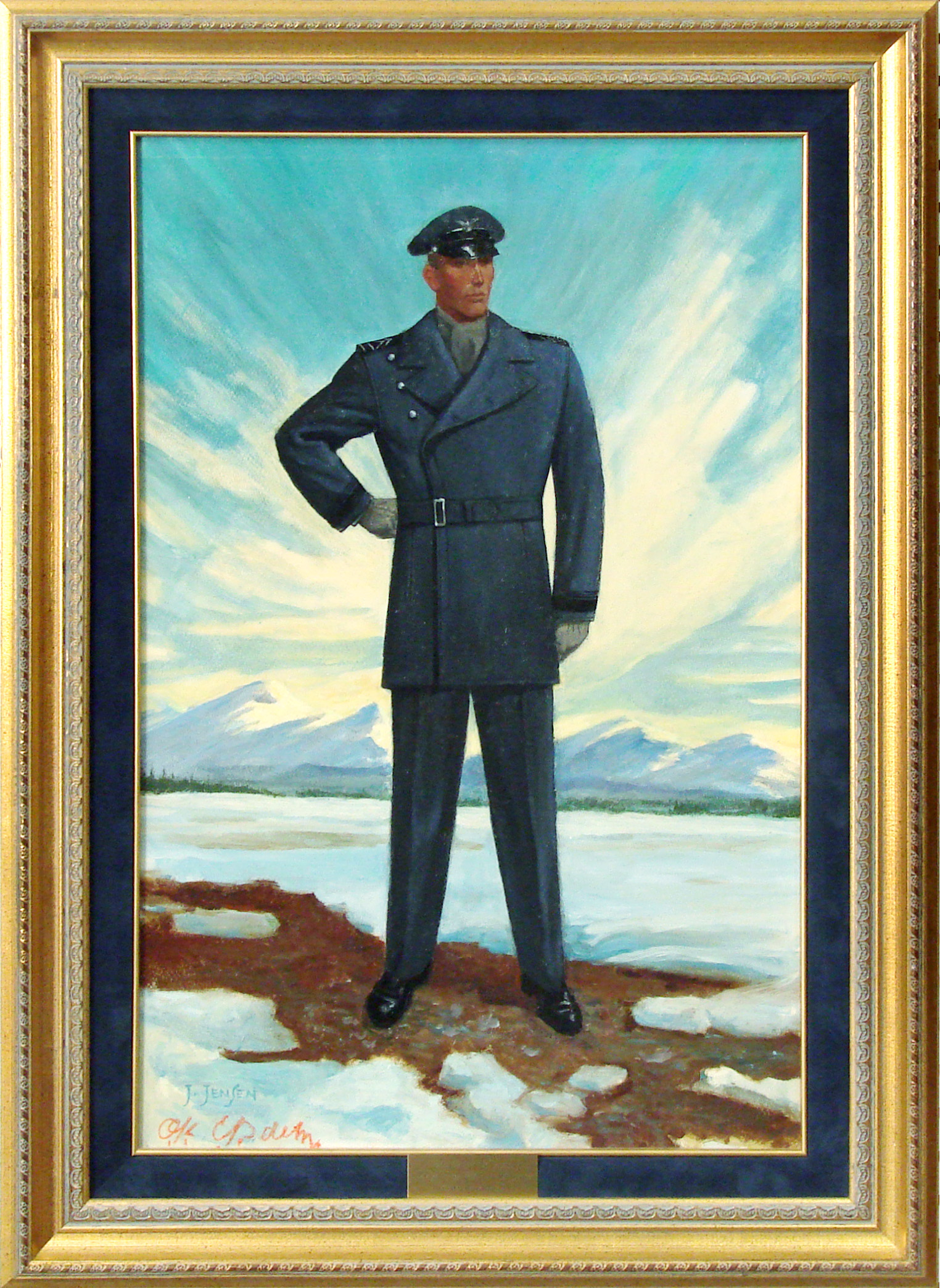
- After dissatisfaction with some of the early cadet uniform designs, Secretary of the Air Force Harold Talbott reached out to movie producer/director Cecil B. DeMille and asked him to design the uniforms. While there was initial concern that the designs might be too lavish, bizarre and “Hollywood,” the response to his staff’s designs was positive, and the design uniforms went into production.
- To design the outside spaces on the campus, SOM contracted with noted landscape architect Dan Kiley. Perhaps best known for designing Gateway Arch National Park in St. Louis, he designed the Air Garden and the dormitory quadrangles, among other features, providing the needed contrast between the man-made and the natural elements in the Cadet Area. Although Kiley’s dorm courtyard landscape design was never built, a relatively recent renovation of Vandenberg Hall included courtyard landscaping that was highly influenced by Kiley’s original concepts.
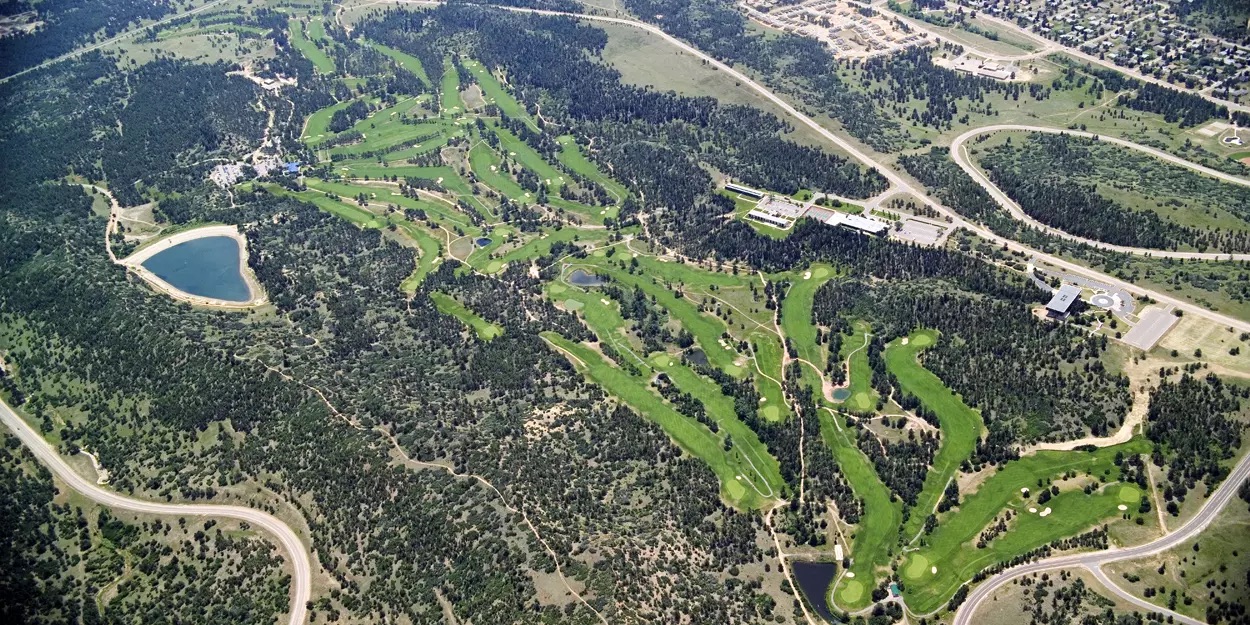
- Like the Cadet Area, a golf course incorporates both the manmade and the natural. Again, the Academy worked with the best in the industry when developing its original golf course. Robert Trent Jones, who was responsible for creating more than 350 courses and remodeling more than 150 others, designed what is now known as the Blue Course at Eisenhower Golf Club, which opened in 1959.

- Finally, the Academy utilized the skills of noted architect and graphic designer Herbert Bayer, who later designed the Colorado campus of The Aspen Institute. Boyle states that, while Bayer wasn’t directly involved in the Academy’s architectural design, “he oversaw all aspects of how the design was presented to the public.”