3D Printers Improve
Cadet Learning
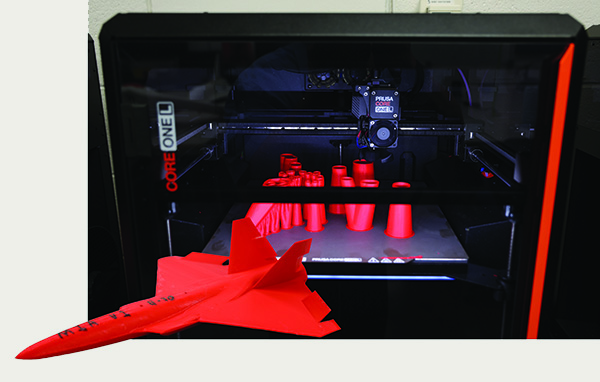
Cadets in the U.S. Air Force Academy’s Introduction to Aircraft Design course are energized by the access they have to new donor-funded 3D printers in the aeronautics lab.
The biggest change this year is capacity. With more 3D printers available, it becomes easier to complete design assignments across all sections of the class.
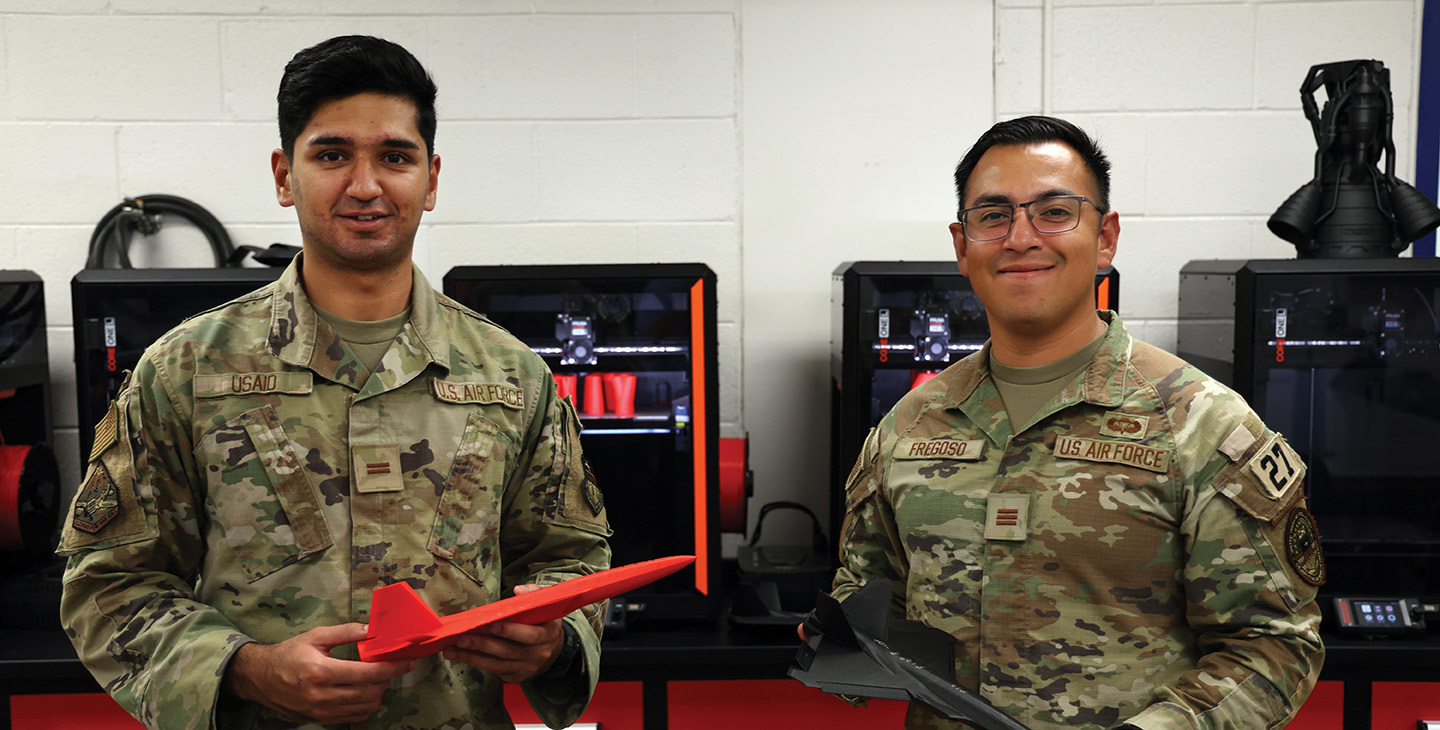
Plus, the printers are helping cadets like Cadet 1st Class Ricardo Fregoso better understand engineering.
“We’re able to see what goes into manufacturing. We can see how our designs turn out; it’s not just looking at a screen,” he explains.
First-class cadets in aeronautics have been working with 3D printers through much of their coursework, starting with Fundamental Tools for Engineering (Aero Engr 206). As they learn more while using the printers, they become more independent — while still having access to assistance from instructors.
“We already know a lot about the printers, but then we have instructors as well who help us along the way to make sure that we don’t put in all our effort … and then the print doesn’t come out,” says Cadet 1st Class Mansoor Usaid.
In Aero 481, the first of two design courses, cadets create a model of a plane based on military requirements. They test it in the Academy’s wind tunnel to measure drag, lift and more. In Aero 482 during the spring semester, they further refine the designs and print larger-scale models that they flight-test outside.
“With models like these, we can easily design any type of pressure that we may want to add into the model so we can gather more data at different points,” Fregoso says. “It’s easier to design, and it makes overall testing easier. And if it breaks, then we just print another one.”
That ability to design, build, test and redesign is at the heart of the hands-on engineering experience the Academy provides — and donor support is helping give cadets more opportunity to experience it.